
Brownouts, their causes and solutions, are a key topic when it comes to protecting your appliances…
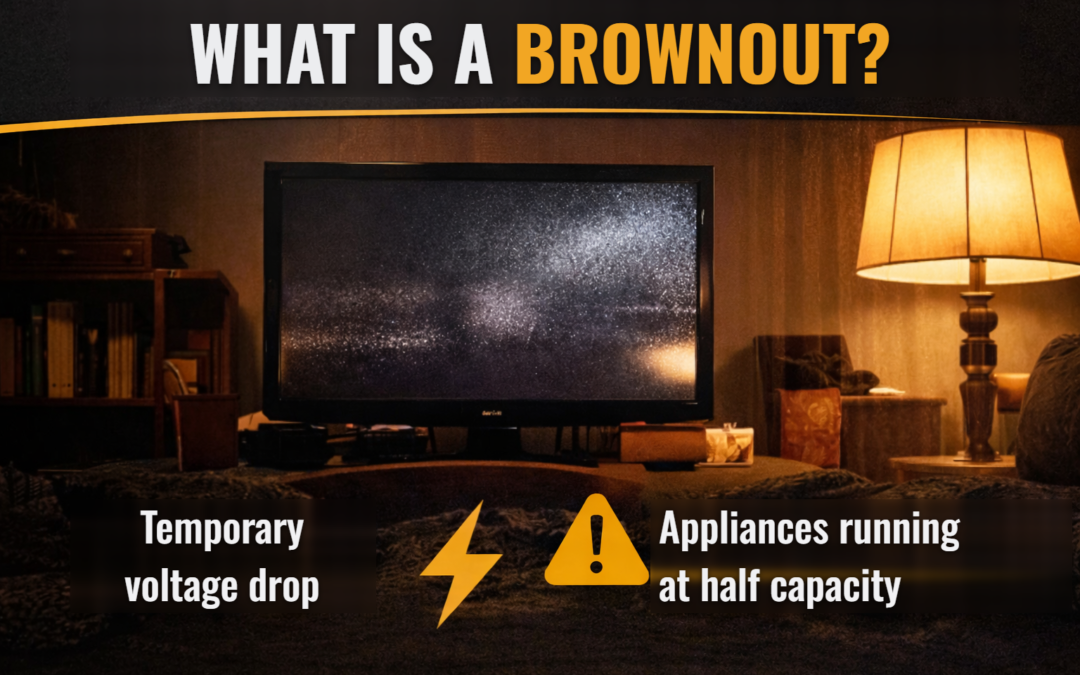
You’re watching a show, the screen flickers, the lights dim for a second and come back. There was no blackout. Nobody in the building was alarmed. But in that “micro crisis” the electronics in your home just went through one of the most uncomfortable scenarios for any device: a temporary voltage drop, what people usually call a brownout o power dip.
In Latin America, conversations about electrical service tend to focus on blackouts. However, brownouts —because they are frequent and “discreet”— are the most underestimated failure. And it’s no small matter: in several countries, regulators and utility companies even have formal claim channels for appliance damage associated with supply interruptions or fluctuations, precisely because the phenomenon exists and happens.
On average, the system goes through many ups and downs over the year. And every up and down is an opportunity for voltage variations to appear before, during or after the interruption.
Why can a brownout be worse than a blackout?
A blackout shuts everything off. A brownout, on the other hand, leaves many devices trying to run on less energy than they need.
A clear example: appliances with motors (refrigerators, air conditioners, washing machines) tend to be more vulnerable to under-voltage: the motor may not have enough power to start, it heats up, the thermal protector trips, and those repeated cycles can end up causing damage over time.
The most exposed devices at home (and why)
No alarmism: not every brownout ends in damage. But some devices suffer more, by design and use:
- Refrigerator and freezer: they start and stop all day; any unstable voltage affects the compressor.
- Air conditioning / refrigeration: they need stability and, after a power cut, a proper delay so the system can “settle” before turning back on.
- TV, consoles, audio, set-top boxes: electronics that are sensitive to variations and transient spikes.
Computers and network (router/modem): constant rebooting isn’t just annoying; it also stresses power supplies and can cause data loss (besides getting damaged).
Signs it’s not “your imagination”
If any of these happen often in your home or building, it’s worth paying attention:
- Lights that dim when the air conditioner or microwave turns on
- A TV or console that “restarts on its own”
- A refrigerator that sounds like it’s trying to start several times
- A router that resets or loses signal for no reason
Appliances that last less than expected (with no clear cause)
The “silent” solution

This is where something used everywhere from homes to businesses comes in: electronic voltage protectors that:
- disconnect when they detect out-of-range voltage (high/low),
- wait a prudent amount of time,
- and reconnect once the grid is stable again.
At Breakermatic, for example, there are protectors with clear specifications for low/high voltage cut-off and standby cycles (key to avoiding hasty reconnections). Brownouts are the kind of failure that doesn’t make a fuss… but takes its toll over time. And in a region where service quality is still measured in hours of interruption rather than minutes, protection stops being “paranoia” and becomes smart maintenance.
If you like, the next step can be as simple as this: check out the Home line and choose protection by type of device (refrigerator, TV, air conditioner, kitchen, computers).