
Buying appliances in 2026 is no longer just about choosing the biggest, the nicest-looking or the one that uses the least energy. Now it’s also about artificial intelligence, connectivity, sensors, automation, savings, mobile apps and increasingly connected homes.
The refrigerator no longer just cools. It can recognize food, suggest recipes and connect with other devices in the home. The washing machine no longer just washes. It can detect loads, adjust cycles and optimize consumption. The air conditioner no longer just lowers the temperature. It learns patterns, regulates the environment and is controlled from your phone.
The modern home is entering a new stage: appliances are no longer isolated machines but are becoming smart systems.
But there’s an important contradiction few buyers consider: the smarter an appliance is, the more it depends on stable power.
A circuit board, a WiFi module, a built-in screen, a sensor or an inverter compressor can be affected by voltage drops, power surges or unstable reconnections after a blackout. And in a region where power failures are still part of everyday life, protecting these devices is no minor detail.
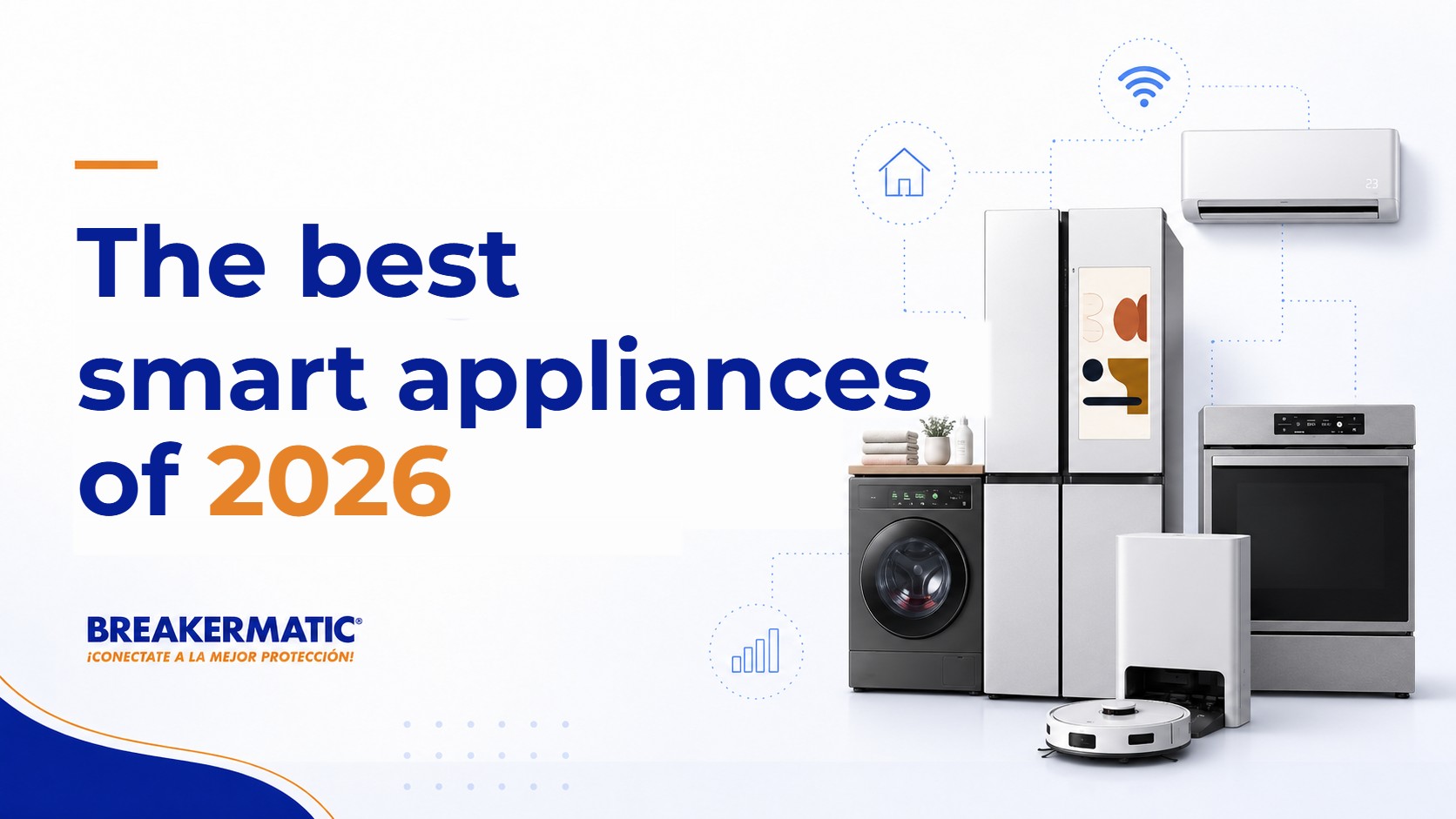
This is our editorial ranking of the most interesting smart appliances of 2026 and what you need to keep in mind to protect them from day one.
Quick summary: which smart appliance leads each category
| Category | Featured model | Why it stands out | Main electrical risk |
| Smart refrigerator | Samsung Bespoke AI Family Hub | AI, screen, food recognition and connected ecosystem | Screen, sensors, circuit board and connectivity |
| Smart air conditioner | Samsung Bespoke AI WindFree / LG Dual Inverter / Midea AI Ecomaster | Energy savings, AI, connectivity and inverter | Compressor, inverter board and unstable reconnections |
| Smart washing machine | Samsung Bespoke AI Laundry Combo / LG WashCombo | Automation, load sensors and smart cycles | Motor, circuit board and control modules |
| Smart cooking | Hisense Smart Induction Range / LG Signature Smart Induction Range | Smart recipes, guided cooking and app control | Circuit board, sensors and voltage fluctuations |
| Smart robot vacuum | Samsung Bespoke AI Jet Bot Steam Ultra / Eufy Omni S2 | Navigation, object detection, automated cleaning | Charging base, battery and electronic modules |
Smart refrigerators: the kitchen becomes a digital hub
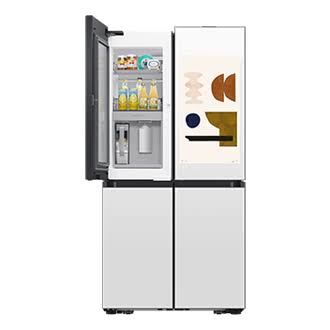
Smart refrigerators are one of the best examples of how the home is changing. It’s no longer just about preserving food. Some now integrate screens, cameras, connectivity, voice assistants and features that can help manage your food.
Samsung has driven this category with its Bespoke AI and Family Hub line. Its recent developments include features such as food recognition, recipe suggestions and connection with other devices in the home. Hisense has also been competing strongly with smart refrigerators that integrate screens, AI cooking agents and features designed to coordinate recipes and kitchen experiences.
Why does this matter to the user? Because the refrigerator is one of the few appliances that works 24 hours a day. It doesn’t rest. It doesn’t switch off at night. It doesn’t unplug on weekends.
That makes it one of the devices most exposed to electrical fluctuations.
A modern refrigerator doesn’t just have a compressor. It also has a circuit board, temperature sensors, a screen, connectivity and control systems. If the voltage rises, drops or returns unstably after a blackout, the risk isn’t just that the refrigerator stops cooling: its internal electronics can also be affected.
In a smart refrigerator, protecting the power means protecting the kitchen’s control center.
Smart air conditioners: more savings, more precision and greater electrical dependence
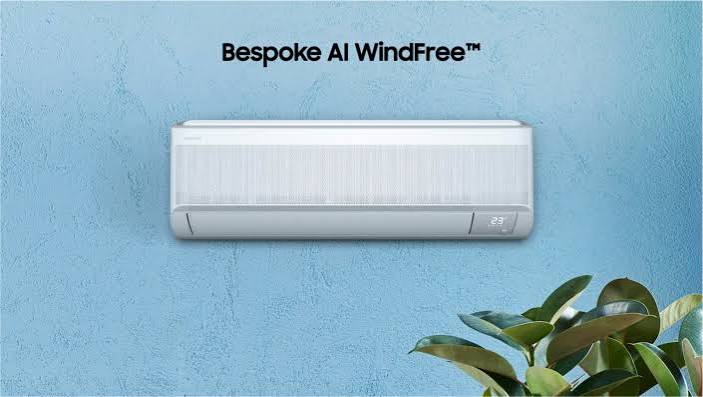
Smart air conditioners are another of the strongest categories of 2026. Extreme heat, the growth of connected homes and the search for energy efficiency are driving units with inverter compressors, artificial intelligence, sensors, mobile apps and automatic consumption modes.
Samsung has strengthened its Bespoke AI WindFree line with smart cooling features, gentler air distribution and adjustments based on environmental data. LG continues to bet on Dual Inverter and connectivity, while Midea has been gaining relevance with inverter units that integrate artificial intelligence, connectivity and energy-saving features.
The appeal is clear: more comfort, less consumption and greater control.
But the critical point is that a modern air conditioner depends on sensitive components: inverter board, compressor, sensors, communication modules and internal controllers.
When there’s a voltage drop, the unit may try to operate without receiving adequate power. When there’s a voltage surge, the electronics can take a heavy hit. And when power returns after a blackout, the reconnection can happen at a moment of instability.
In climate control equipment, protection isn’t a luxury. It’s part of a smart installation.
Smart washers and dryers: automation for one of the most repeated household chores

Laundry is changing too. New smart washers and dryers don’t just let you pick a cycle. They can now detect the type of load, adjust consumption, optimize washing and drying times, connect to mobile apps and even coordinate functions between units.
Samsung has introduced updates to its Bespoke AI laundry ecosystem, with units designed to reduce cycle times, improve drying and adapt operation to usage conditions. LG has also pushed smart washing solutions with automatic cycles, connectivity and systems designed to simplify the routine.
This type of appliance has an important technical point: it combines mechanical power with advanced electronics.
A smart washing machine has a motor, sensors, a pump, a control board, a screen and communication modules. A dryer may add heating elements, heat pumps, humidity sensors and internal controllers.
When the voltage isn’t stable, these components may work under strain or suffer progressive damage. Often the failure doesn’t appear immediately. At first it may show up as an error on the screen, a cycle that doesn’t finish, an unexpected restart or a loss of performance.
In smart appliances, an electrical failure can turn into a costly repair.
Smart kitchens: the new frontier of the connected home
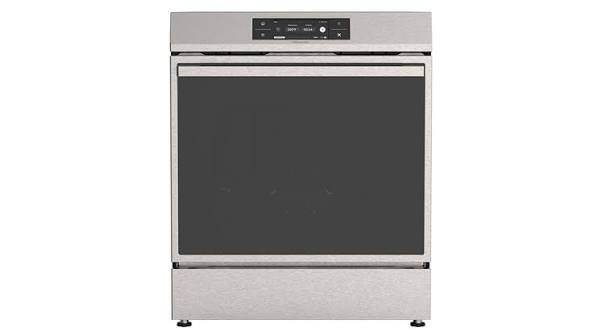
The smart kitchen is one of the most interesting categories of 2026. It’s no longer just about ovens or stoves, but about systems that can suggest recipes, adjust temperature, recognize dishes and connect with other devices.
Hisense introduced smart induction ranges and AI-based cooking agents. LG has also developed premium smart kitchen lines, including induction, app control and connected features to improve the user experience.
The kitchen is becoming an automated space.
But this also means a greater dependence on electronics. Induction cooktops, smart ovens and connected systems run on sensors, boards, screens, control modules and software.
An electrical fluctuation can affect cooking precision, digital controls or the unit’s internal systems. And when it comes to the kitchen, the risk isn’t just financial. It can also affect safety, daily use and the household’s routine.
That’s why electrical protection in modern kitchens should be seen as part of the natural evolution of the smart home.
Robot vacuums and smart home devices: small devices, high electronic dependence

Robot vacuums, purifiers, smart locks, charging stations, voice assistants and connected devices are growing quickly because they handle daily tasks through automation.
In 2026, the most advanced robot vacuums already include smart navigation, object recognition, liquid detection, self-cleaning stations and algorithms to improve cleaning routes. Samsung, Eufy, Dreame and other brands are pushing this market toward increasingly autonomous devices.
Although they don’t always cost as much as a refrigerator or an air conditioner, these devices depend almost entirely on electronics, batteries, sensors and connectivity.
Their weak point is usually the charging base. If a voltage surge or an unstable reconnection occurs, the adapter, the battery or the control board can be affected.
The five technologies changing appliances in 2026
The first major technology is artificial intelligence. Appliances can now analyze habits, adjust cycles, recognize food, optimize consumption and offer recommendations. This changes the user’s relationship with their devices: they are no longer just used, they also learn.
The second is connectivity. Apps such as SmartThings, ThinQ, SmartHome and other ecosystems let you control devices from your phone, automate routines and receive alerts.
The third is energy efficiency. Manufacturers are competing to reduce consumption without sacrificing performance, using inverter compressors, sensors and automatic modes.
The fourth is automation. Washers that adjust cycles, air conditioners that regulate temperature, ovens that suggest recipes and robots that detect obstacles are signs of an increasingly autonomous home.
The fifth is integration. Appliances are starting to communicate with each other. The refrigerator can suggest a recipe, the oven can adjust settings and the user can control everything from a single ecosystem.
The invisible problem: more intelligence also means more sensitivity
Here’s the point few tech blogs mention.
A smart appliance can be more efficient, more convenient and more advanced. But it also includes more electronics. And electronics need stability.
Voltage drops, power surges, blackouts and unstable reconnections can affect boards, screens, sensors, compressors, charging bases and communication modules.
The problem is that the damage isn’t always immediate. Sometimes the device keeps working, but its internal components are weakened. Then failures, restarts, errors or performance loss start to appear.
That’s why buying smart technology without protecting it is an incomplete decision.
How to protect a smart home
It’s not about living in fear of every blackout. It’s about understanding that power is the foundation of the whole system.
Electronic voltage protectors are designed to detect when power goes outside a safe range. If there’s an anomaly, they cut off the current and only allow reconnection once the grid stabilizes again.
This is especially important for devices such as refrigerators, air conditioners, TVs, entertainment systems, washing machines, routers, computers and smart devices.
In a connected home, protecting the power means protecting the entire investment.
Breakermatic: protection for the new generation of appliances
At Breakermatic we understand that technology moves fast, but power quality doesn’t always keep up.
That’s why our solutions are designed to protect equipment against voltage drops, power surges and unstable reconnections. In homes, businesses and industries, electrical protection is no longer an accessory: it’s a smart decision.
If you’re going to invest in smart appliances, start by protecting them from day one.