
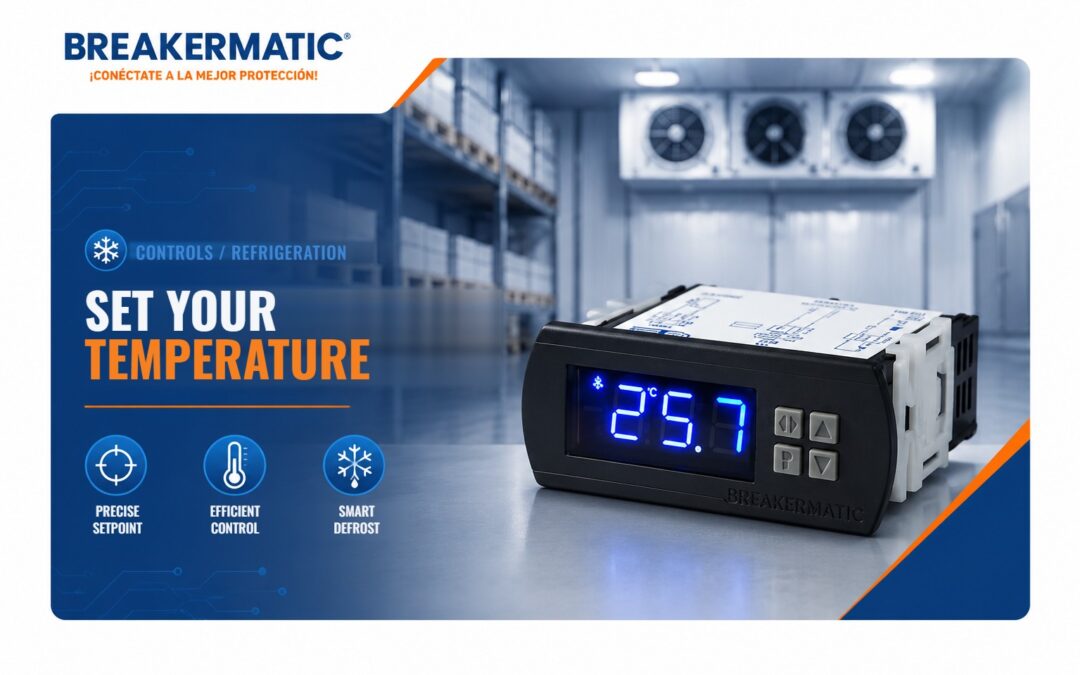

To configure a refrigeration controller, first define the setpoint, then the differential that determines when the compressor starts again, check the placement of the probe and configure the defrost according to the type of installation. The right values depend on the stored product and the design of the cold room.
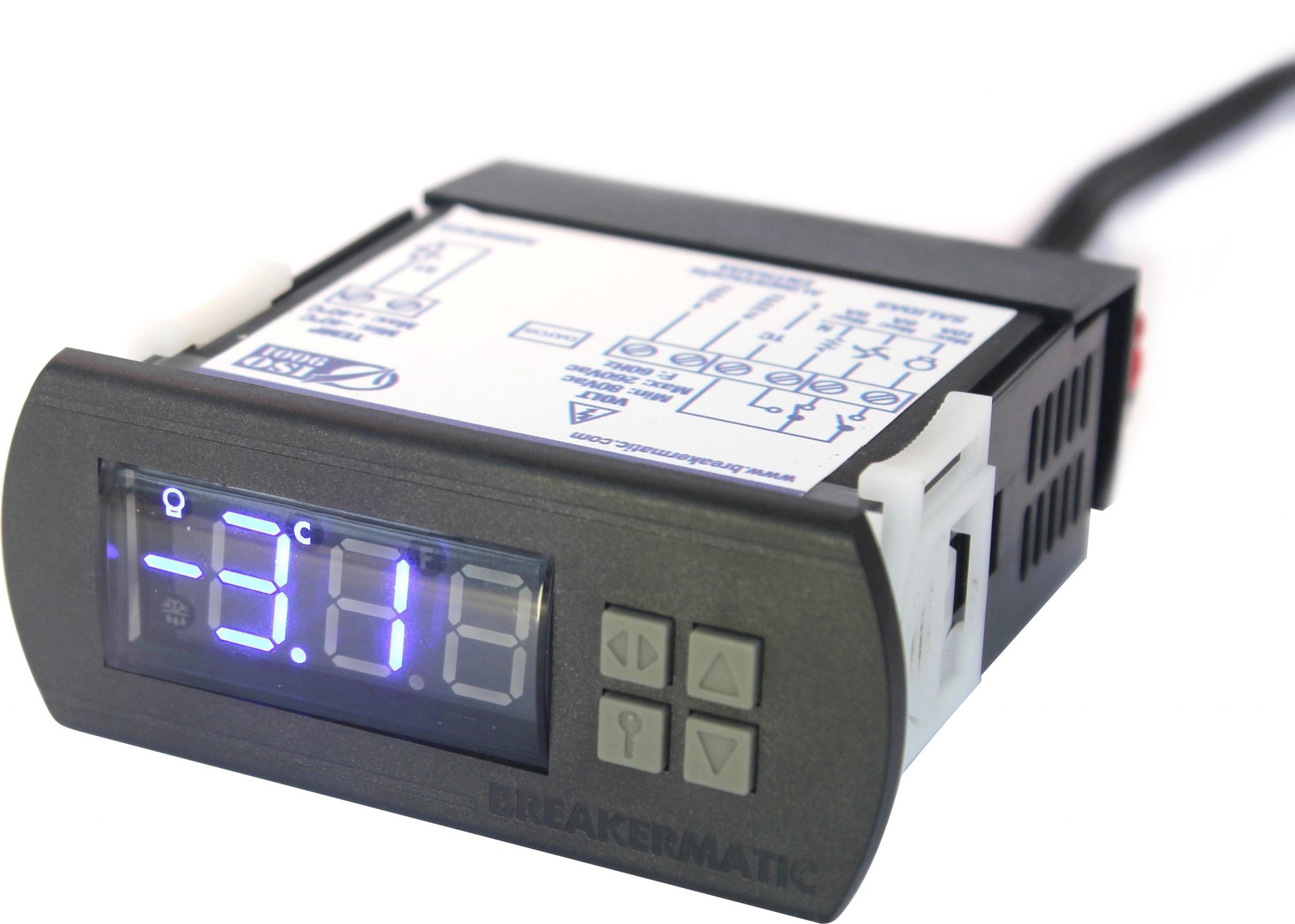
What does the device actually control?
The controller receives the temperature through a probe and compares that reading with the programmed parameters.
When the temperature reaches the point set to start refrigeration, the controller activates the compressor. When it returns to the set value, the cycle ends.
That’s why two parameters are essential: setpoint and differential.
1. The setpoint doesn’t mean “how cold it can get”
The setpoint is the reference temperature the application needs.
It shouldn’t be configured by simply entering the lowest possible value. First we need to know what product we are preserving and what its proper temperature range is.
2. The differential determines when it starts again
The differential sets the gap between the stop temperature and the point at which refrigeration turns on again.
A differential that’s too small can lead to more frequent on/off cycles. One that’s too wide allows larger temperature swings.
The configuration must balance thermal stability, load characteristics and system behavior.
3. A poorly placed probe can ruin a good configuration
The controller can only make decisions with the information it receives from its sensor.
If the probe measures an area that doesn’t properly represent the cold room environment, the display may show a temperature that doesn’t match the actual condition of the stored product.
The probe is placed where it can properly represent the thermal condition you actually want to control.
Direct streams of cold air, doors, evaporators or extreme spots can alter the reading the controller receives.
4. Then comes defrost
The evaporator can build up ice due to humidity and air infiltration. If the ice builds up too much, it can affect airflow and heat exchange.
But not all installations defrost the same way.
- Natural defrost by stopping the compressor.
- Defrost using an electric heater.
- Systems with independent fan management.
- More advanced applications using hot gas.
How to configure a refrigeration controller step by step
Identify the application
Define what product is stored, what range it needs and what type of refrigeration the installation uses.
Set the setpoint
Program the reference temperature according to the actual preservation requirements.
Configure the differential
Define how much the temperature must rise before refrigeration is activated again.
Check the minimum and maximum limits
Limiting the range helps prevent accidental changes outside the allowed parameters.
Configure the standby cycle
Prevent the compressor from reconnecting too quickly by setting the corresponding delay.
Program the defrost
Use logic compatible with the type of evaporator and refrigeration system installed.
Check the probe
Make sure the reading properly represents the temperature you actually want to control.
After programming, observe several cycles
A configuration isn’t validated just by looking at the display. You need to check how the cold room actually responds over different cycles.
Watch when the compressor starts, how long it takes to reach the setpoint, when it stops and how the temperature rises again.
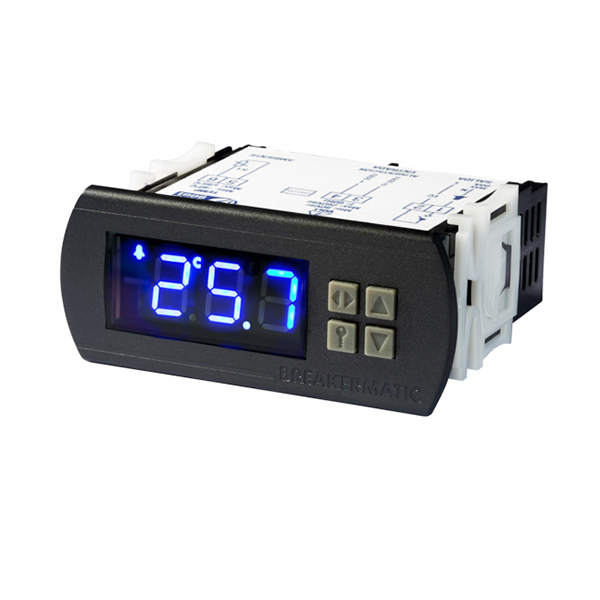
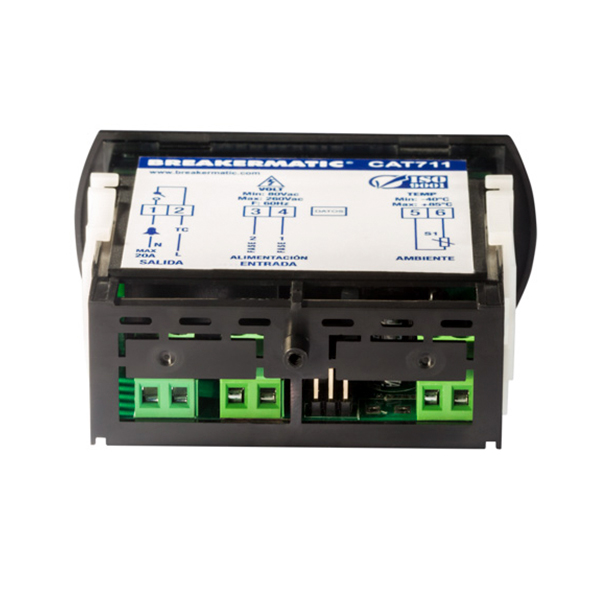
CTP-711
Designed to control temperature in cold rooms, display cases, refrigerated cabinets and other preservation applications compatible with its operating logic.
- Programmable temperature control.
- Preservation applications.
- Compatible with cold rooms and refrigerated cabinets.
- Multi-voltage power supply.
- Standard versions and versions with audible alarm.
The CTP-711 isn’t the solution for every cold room
Choosing the right controller also means recognizing when an application needs more advanced logic.
CTP-711
Designed for preservation applications that don’t require independent fan control or electric heater defrost.
- Preservation.
- Compressor control.
- Natural defrost depending on the application.
CTP-732
For installations that require additional functions such as fan management and more complete defrost systems.
- Forced ventilation.
- Advanced defrost management.
- Greater control over the installation.
The costliest mistake: trying to fix everything from the keypad
A controller can correct how the system is managed, but it can’t fix every refrigeration fault.
- Dirty condenser.
- Door that doesn’t seal properly.
- Blocked evaporator.
- Refrigerant loss.
- Airflow problems.
- Worn-out compressor.
Technical sources
Frequently asked questions
What is the setpoint of a refrigeration controller?
It is the reference temperature the controller uses to manage the operation of the refrigeration system.
What is the temperature differential?
It is the gap between the stop temperature and the point at which refrigeration turns on again. Its setting directly affects temperature swings and compressor cycles.
Where should the temperature probe be placed?
In a location that properly represents the thermal condition you want to control, avoiding artificial readings caused by direct streams of cold air or other extreme areas.
Does the CTP-711 control an electric defrost heater?
The CTP-711 is designed for applications that don’t require electric heater defrost or independent fan control.
Which controller should I use if I need to manage the fan and defrost?
For more advanced applications, a controller with additional functions should be considered, such as Breakermatic’s CTP-732, depending on the actual characteristics of the installation.
Controlling temperature well starts with understanding the system
Discover the CTP-711 and the Breakermatic solutions developed for temperature control and monitoring in refrigeration.
View CTP-711Technical note: temperature, differential, defrost and operating time parameters should be defined according to the stored product, the characteristics of the installation and the applicable technical recommendations. Electrical installation and configuration should be carried out by technically qualified personnel.