
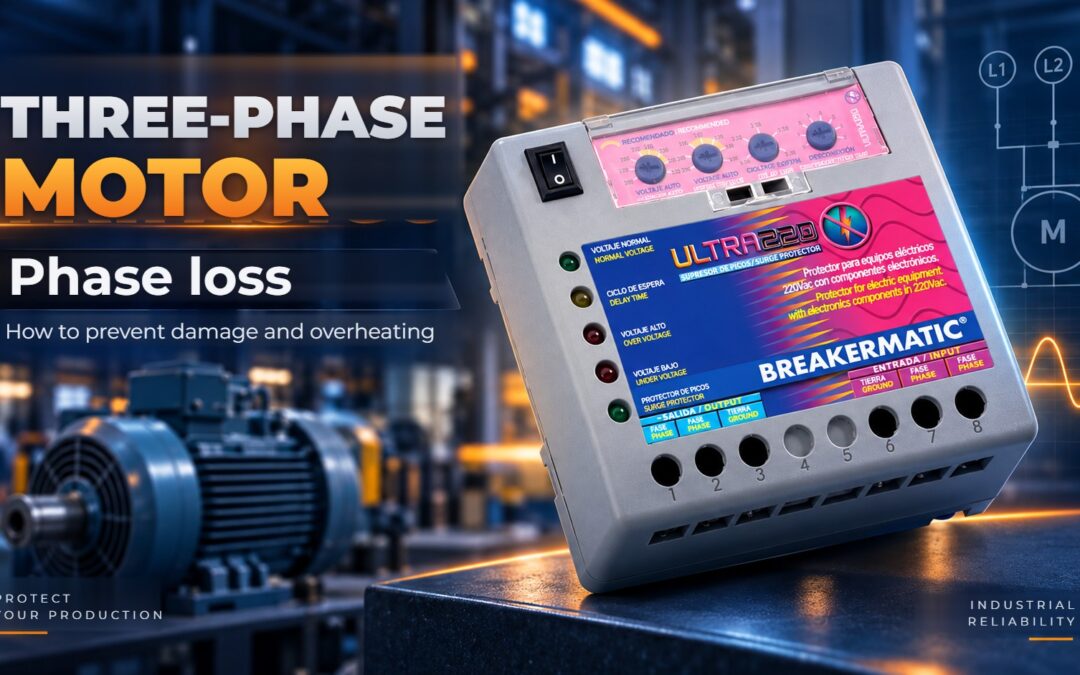

When a three-phase motor loses a phase, the remaining phases stop working under balanced conditions. If the motor keeps running, thermal stress increases, its ability to deliver torque may drop and its windings can end up damaged. Proper protection must detect the anomaly and disconnect the motor before the damage progresses.
Why can the motor keep running?
Under normal conditions, the three phases produce a balanced rotating magnetic field that allows the motor to operate correctly.
If a phase disappears while the motor is already running, the rotor’s inertia and the remaining supply may allow it to keep turning.
From the outside, it may look like it’s still working. The problem is that, electrically, it is no longer in a normal condition.
Why a phase loss can end up burning out the motor
The main problem is the rise in temperature. When the phases stop working in a balanced way, the current distribution changes and thermal stress on the motor increases.
The windings are coated with insulating materials that must be kept within certain thermal limits. If the abnormal condition lasts long enough, that insulation can progressively deteriorate.
What can cause a phase loss?
The source of the fault isn’t necessarily inside the motor. It can appear at any point in the power supply.
- Blown fuse.
- Loose or deteriorated power connections.
- Problems in contactors or panel connections.
- Interruptions in one of the supply conductors.
- Power grid anomalies.
Not necessarily.
Overcurrent and short-circuit protection is essential, but phase loss, incorrect sequence, imbalance and voltage anomalies are different electrical conditions.
That’s why there are devices specifically designed to monitor three-phase networks.
| Condition | What can happen | Required monitoring |
|---|---|---|
| Loss of one phase | Unbalanced operation and heating | Phase loss detection |
| Phase imbalance | Uneven currents and temperatures | Imbalance monitor |
| Incorrect sequence | Wrong direction of rotation in some applications | Sequence monitor |
| High or low voltage | Operation outside suitable conditions | Voltage protection |
| Overcurrent / short circuit | Severe electrical damage | Breaker, fuse or appropriate protection |
Proper protection starts before the motor
In a three-phase installation, monitoring can act before the anomaly turns into a thermal failure of the motor.
A three-phase protector can continuously monitor the power supply and act on the control circuit when it detects a condition outside the defined parameters.
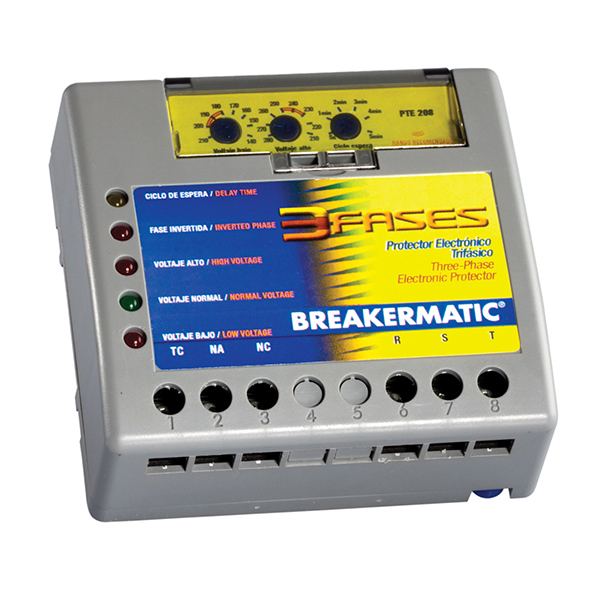
3 Fases D RST+N Digital Three-Phase Protector
Designed to monitor the power supply of three-phase equipment and act when conditions appear that could compromise operation.
- Phase loss detection.
- High and low voltage monitoring.
- Phase imbalance monitoring.
- Incorrect sequence detection.
- Power supply condition monitoring.
- Standby cycle before reconnection.
An important technical detail
The three-phase protector is not meant to directly power a high-power industrial motor.
Its function is to monitor the network and use its control output to act on elements of the system, such as an external contactor or a stop signal, depending on the installation design.
It’s not just about standalone motors
Three-phase monitoring can be relevant for pumps, compressors, refrigeration systems, HVAC, elevators, industrial conveyors and other loads where an incorrect power supply can affect operational continuity.
A complete line of three-phase protection
Not all installations work with the same voltage, configuration or monitoring needs.
Breakermatic offers different three-phase protector models for commercial and industrial applications.
Explore Breakermatic Three-Phase Protectors →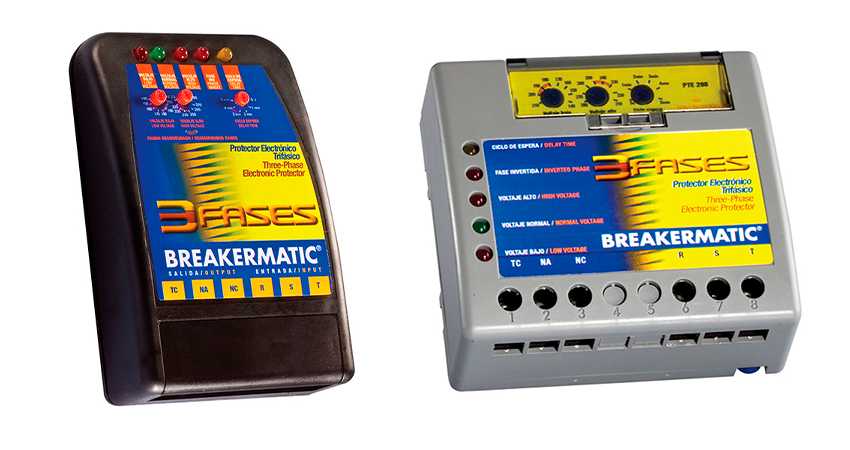
Detecting the fault costs less than discovering it in the motor
A phase loss can start with a relatively small fault and end up compromising one of the most important components of an installation.
That’s why motor protection shouldn’t start when the smell of burnt insulation appears.
It should start earlier.
Technical sources
Frequently asked questions
Can a three-phase motor keep running if it loses a phase?
Yes, it can keep turning if the loss occurs while the motor is already running. However, it is left operating under an abnormal condition that can cause imbalance, heating and progressive deterioration.
What can cause a phase loss?
Possible causes include a blown fuse, faulty electrical connections, conductor failures, problems in switching devices or power supply anomalies.
Does a conventional breaker detect phase loss?
It should not be assumed that overcurrent protection automatically monitors phase loss, sequence, imbalance and voltage conditions. These are different functions and may require specific devices.
How do you protect a motor against phase loss?
With a system that continuously monitors the phases and can act on the control circuit when it detects an abnormal condition. Selection should be made according to the voltage, configuration and characteristics of the installation.
Protect the installation before protecting the repair
Discover the Breakermatic solutions developed to monitor three-phase networks, motors and industrial applications.
Discover Three-Phase ProtectorsTechnical note: the selection, configuration and installation of protection devices for motors and three-phase networks should be carried out according to the electrical characteristics of the load and the installation and the manufacturers’ recommendations, and by technically qualified personnel.